
By Jack Pan — Founder of Cartosketch, developer, designer, and map enthusiast
8 AI Map Styles for Posters, Slides, and Games
A visual reference for all 8 Cartosketch styles — cartoon, watercolor, ink wash, vintage map, pixel art, oil painting, blueprint, and cyberpunk — with guidance on when to use each.
Cartosketch is an AI-powered map styling tool that transforms real geographic data from Mapbox into artistic visual assets — watercolor paintings, ink wash illustrations, and cartoon sketches — in under 60 seconds. Cartosketch ships with 8 styles: cartoon, watercolor, ink wash, vintage map, pixel art, oil painting, blueprint, and cyberpunk. Each trades legibility for mood differently, so matching style to context is more important than picking the most technically impressive one.
The eight styles in one table
| Style | Vibe | Best for |
|---|---|---|
| Cartoon | Vibrant, playful | Notion pages, indie games, zines |
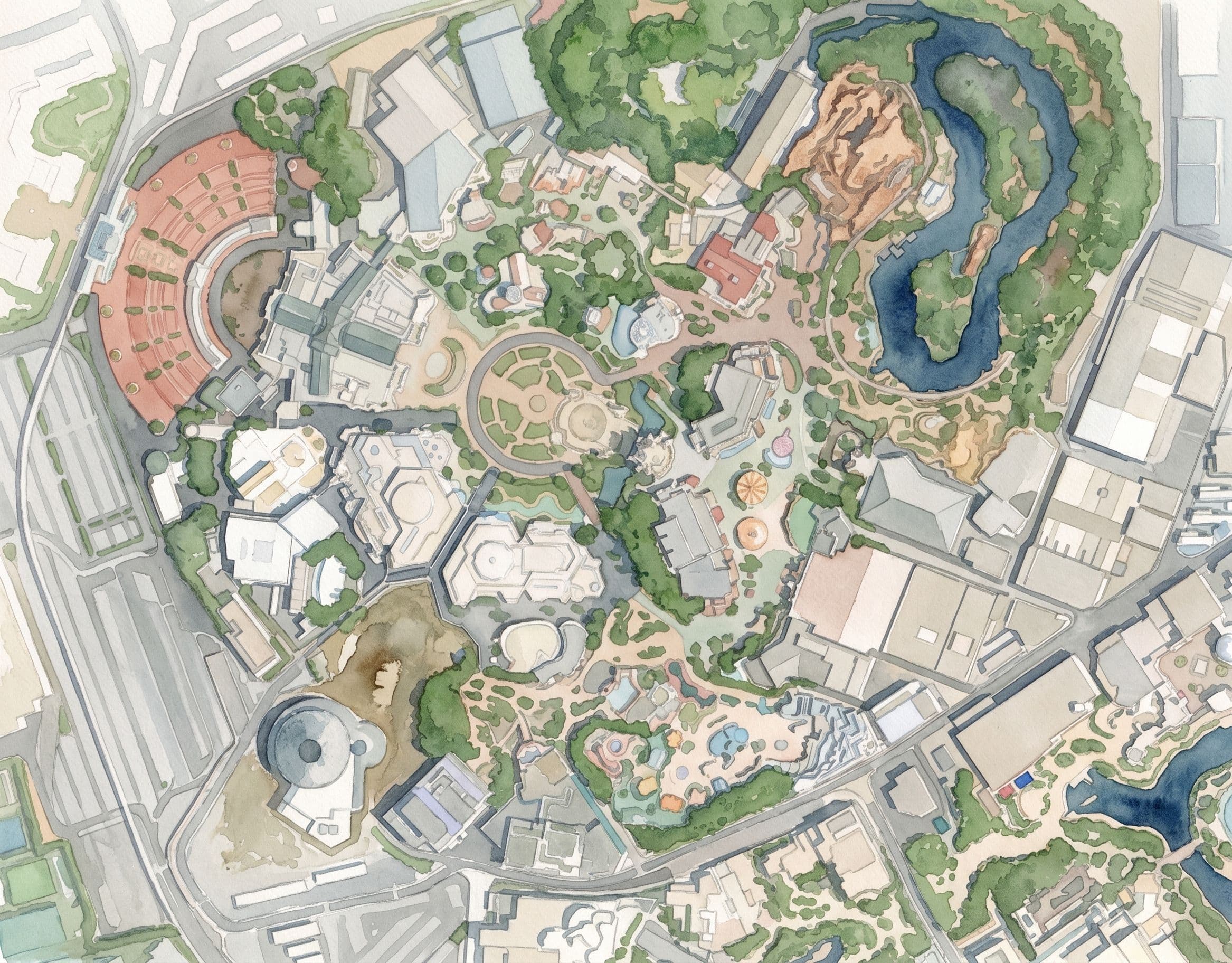
| Watercolor | Soft, editorial | Travel content, wedding maps, book covers |
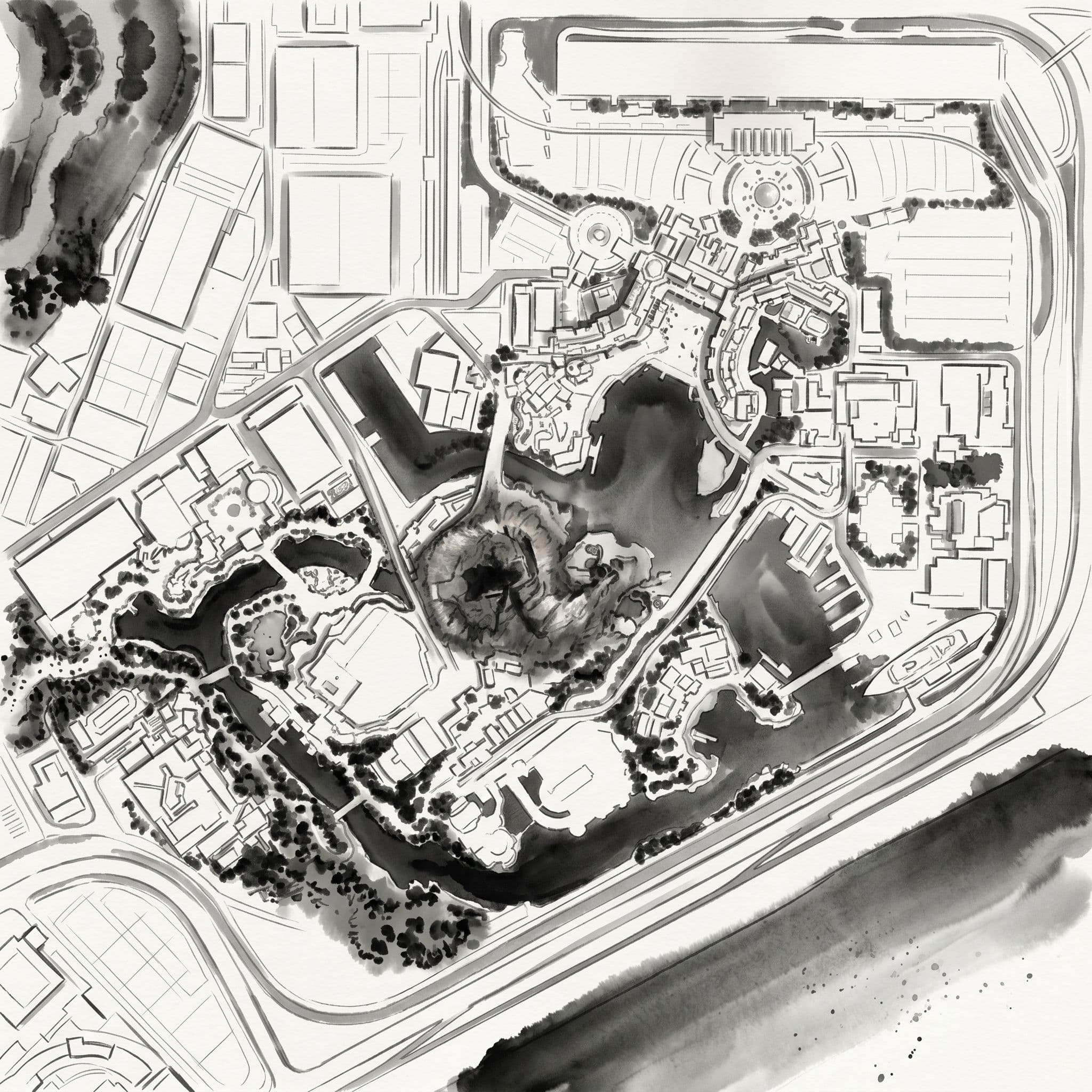
| Ink Wash | Moody, monochrome | Mystery games, editorial illustration |
| Vintage Map | Aged parchment, antique | TTRPG, historical docs, travel journals |
| Pixel Art | Retro 16-bit | Indie games, nostalgic posters |
| Oil Painting | Rich impasto, painterly | Gallery prints, book covers |
| Blueprint | Engineering diagram | Urban planning, real-estate decks |
| Cyberpunk | High-contrast, neon | Tech pitches, sci-fi games |
Pairing style to context
- If the map will sit next to dense text, choose blueprint — its technical line work stays legible at small sizes.
- If the map is the hero visual (poster, book cover), choose watercolor or vintage map — both have texture that prints beautifully.
- If the map must sit on a dark UI, choose cyberpunk — its neon highlights pop against black backgrounds.
FAQ
- Can I combine styles?
- Indirectly. Generate a base image in one style, then use Modify with a prompt like "add neon highlights" to blend traits of a second style without losing the original composition.
- Which style is the most readable?
- Minimalist line art, followed by blueprint. Both preserve street hierarchy and suppress ornamentation.
- Which style prints best?
- Watercolor and vintage cartography — both have natural grain that forgives paper and ink variance at larger print sizes.
Founder of Cartosketch — developer, designer, and map enthusiast.